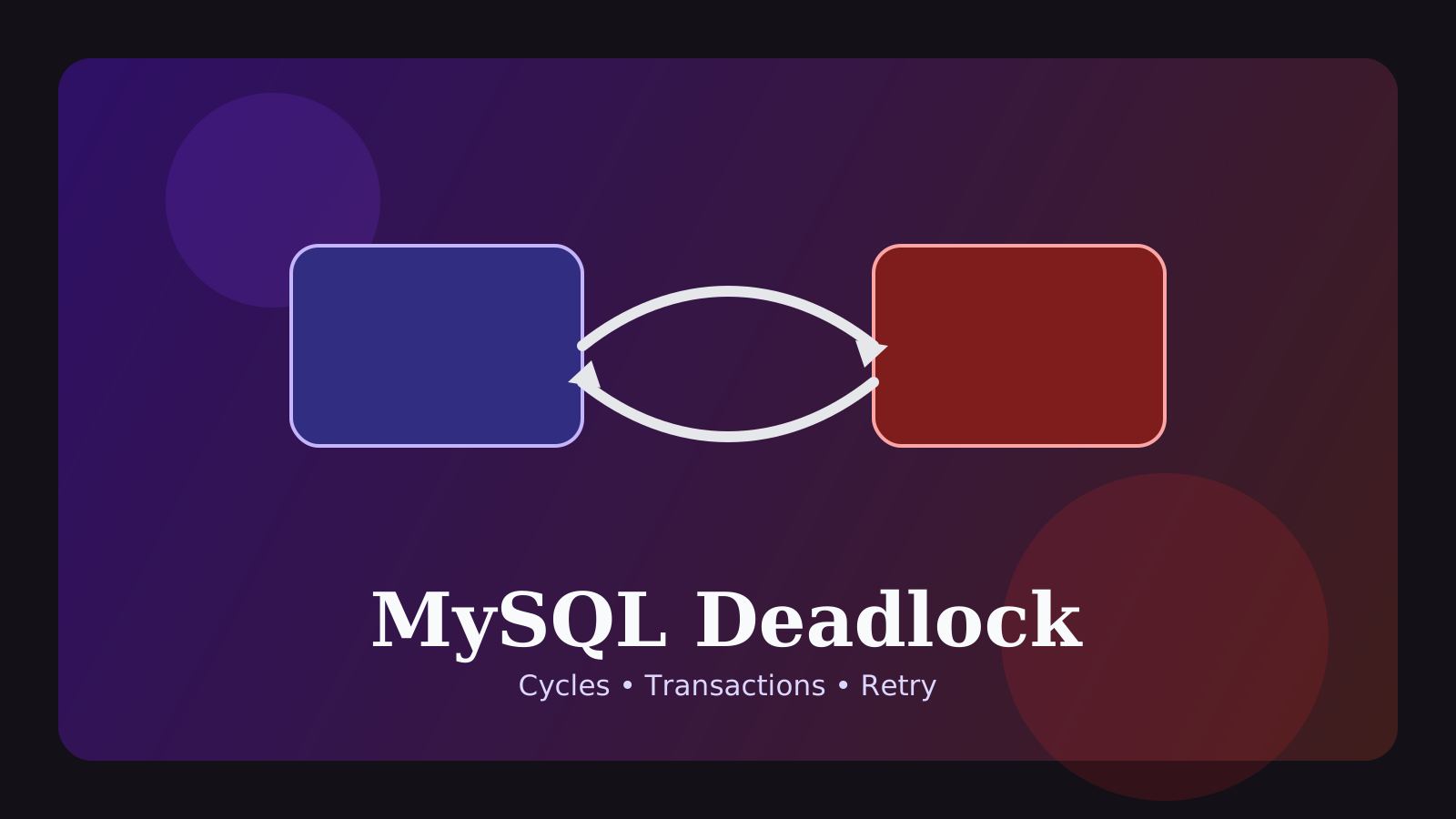
When you see a deadlock found when trying to get lock error in MySQL, it can seem similar to a lock wait timeout at first. But a deadlock is not just about waiting too long. It is about a circular dependency where transactions block each other.
In this post, we will cover:
- what a deadlock is
- how it differs from lock wait timeout
- when it commonly happens
- how to trace the cause in practice
The core idea is that a deadlock is not just one slow query. It is a conflict structure created when transactions touch resources in different orders.
What is a deadlock?
A deadlock happens when two or more transactions each wait for a lock held by the other, so none of them can proceed.
For example:
- transaction A locks row 1, then waits for row 2
- transaction B locks row 2, then waits for row 1
Now both are stuck. MySQL usually detects this and rolls one of them back.
How is it different from lock wait timeout?
Both involve locks, but the shape is different.
lock wait timeout: one transaction waits too longdeadlock: transactions wait on each other in a cycle
So a deadlock is not just about time. It is about a structurally unresolvable waiting graph.
When does this happen often?
Common patterns include:
- multiple transactions updating the same set of rows in different orders
- batch jobs and live requests modifying the same tables together
- transactions touching too many rows
- weak indexing causing wider lock ranges
So query text matters, but access order and transaction scope matter even more.
What should you inspect first?
A useful sequence is:
- inspect the failing query and transaction path
- identify the tables and row sets involved
- check whether different code paths access the same resources in different orders
- review whether transactions stay open longer than needed
The most helpful insight often comes from understanding the concurrent workflow around the error, not just the error line itself.
Why does access order matter so much?
Many deadlocks can be reduced if transactions touch shared resources in a consistent order.
For example, if every transaction always locks:
- user row
- order row
in the same order, contention becomes much simpler. If one path does the reverse, circular waits become more likely.
Why should transactions stay short?
The longer a transaction stays open, the longer it holds locks, and the higher the chance of deadlock.
Risky patterns include:
- calling external APIs inside a transaction
- packing too much business logic into one transaction
- updating too many rows at once
Common misunderstandings
1. Deadlocks mean the database is unstable
In many cases, the root cause is application access order and transaction design.
2. Rare deadlocks can be ignored
Even low-frequency deadlocks can hurt users if they occur on critical paths.
3. Adding retries fully solves the problem
Retries can help absorb incidents, but they do not remove the underlying conflict pattern.
FAQ
Q. Can deadlocks be eliminated entirely?
Not always, but consistent access order and smaller transaction scope can reduce them a lot.
Q. What should I change first?
Start by reviewing transaction order and the set of resources each flow touches.
Q. Are retries still useful?
Yes, often. But they should be a safety layer, not the only fix.
Read Next
- For broader lock waiting behavior, continue with the MySQL Lock Wait Timeout Guide.
- For access-path and index issues, read the MySQL Slow Query Guide.
While AdSense review is pending, related guides are shown instead of ads.
Start Here
Continue with the core guides that pull steady search traffic.
- Middleware Troubleshooting Guide: Redis vs RabbitMQ vs Kafka A practical middleware troubleshooting guide for developers covering when to reach for Redis, RabbitMQ, or Kafka symptoms first, and which problem patterns usually belong to each tool.
- Kubernetes CrashLoopBackOff: What to Check First A practical Kubernetes CrashLoopBackOff troubleshooting guide covering startup failures, probe issues, config mistakes, and what to inspect first.
- Kafka Consumer Lag Increasing: Troubleshooting Guide A practical Kafka consumer lag troubleshooting guide covering what lag usually means, which consumer metrics to check first, and how poll timing, processing speed, and fetch patterns affect lag.
- Kafka Rebalancing Too Often: Common Causes and Fixes A practical Kafka troubleshooting guide covering why consumer groups rebalance too often, what poll timing and group protocol settings matter, and how to stop rebalances from interrupting useful work.
- Docker Container Keeps Restarting: What to Check First A practical Docker restart-loop troubleshooting guide covering exit codes, command failures, environment mistakes, health checks, and what to inspect first.
While AdSense review is pending, related guides are shown instead of ads.