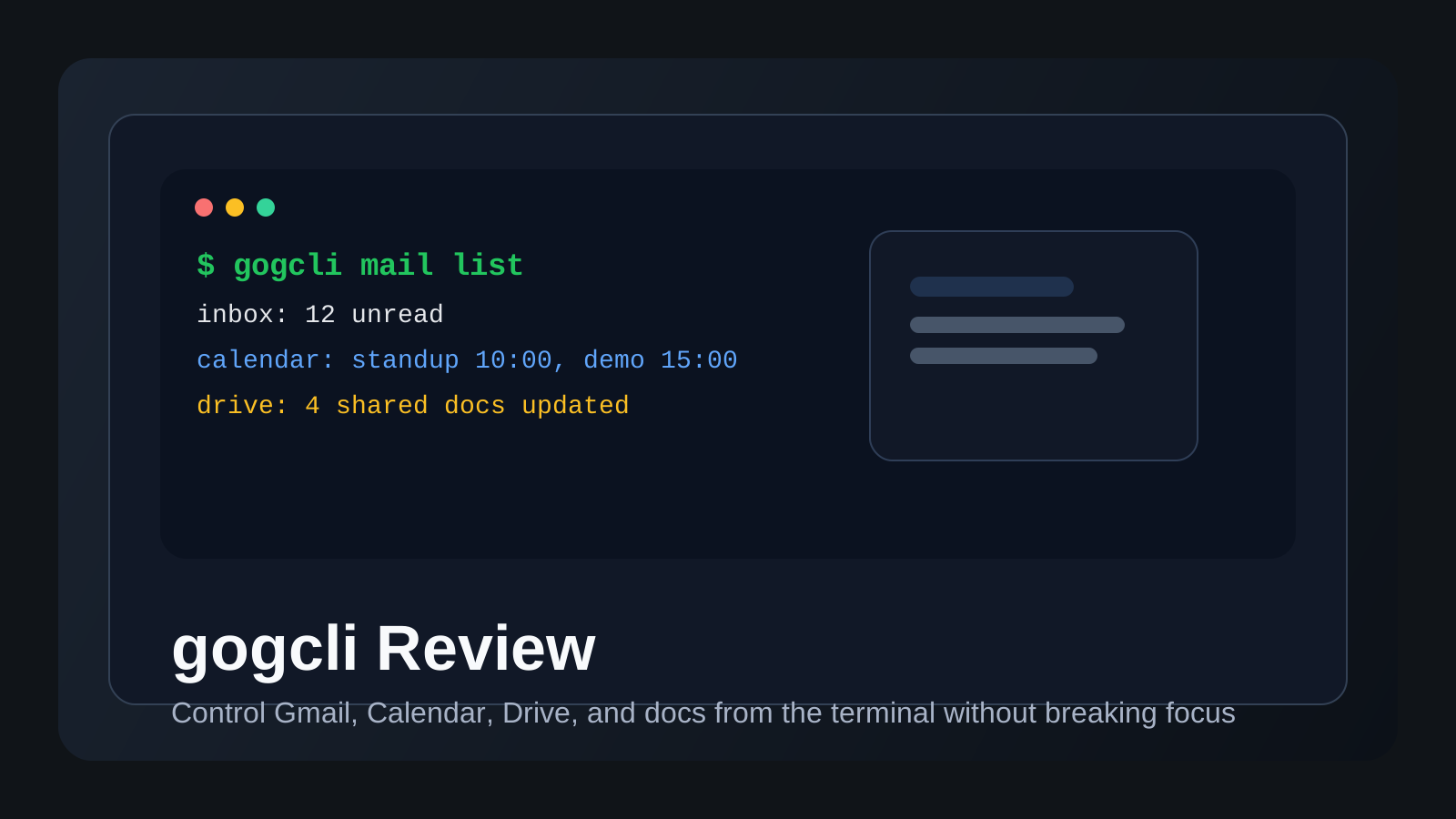
If you spend most of the day in the terminal, jumping out to Gmail or Google Calendar can break focus faster than it should.
That is the problem gogcli tries to solve. It pulls Google Workspace actions into the command line, which makes it useful for both terminal-first developers and small automation flows.
This review focuses on the practical questions:
- what
gogcliactually does - where it feels genuinely useful
- what the setup friction looks like
- who should use it and who probably should not
What gogcli is
gogcli is a command-line interface for Google Workspace services.
It supports working with:
- Gmail
- Google Calendar
- Google Drive
- Contacts
- document-oriented workflows
What makes it more than a novelty is that it supports both read and write actions, which means it can become part of real shell automation instead of acting as a simple lookup tool.
Where gogcli feels most useful
The value of a tool like this is not only that it can access Google services. It is that it keeps those actions inside the workflow many developers already use.
That becomes useful when you want to:
- search Gmail without leaving the terminal
- create or inspect calendar events quickly
- script file lookups in Drive
- combine Google Workspace data with shell tools like
jq
If that is already how you work, the appeal becomes obvious very quickly.
Gmail in the terminal
One of the strongest parts of the tool is Gmail access.
You can search mail, inspect threads, archive messages, and download attachments directly from the CLI.
gog gmail search 'newer_than:7d is:unread' --max 10That is useful on its own, but it becomes much more valuable when you connect it to repeatable workflows.
Calendar scheduling without opening the browser
Calendar support matters because scheduling work is often interruptive.
With gogcli, you can create events and inspect calendars without breaking a terminal-focused flow.
gog calendar create primary \
  --summary "Sprint Planning" \
  --from 2026-03-05T10:00:00Z \
  --to 2026-03-05T10:30:00Z \
  --attendees "dev1@company.com,dev2@company.com"
This is especially nice when the event is part of a script, checklist, or routine developer workflow.
Drive access for search and automation
Drive support makes the tool more broadly useful than a Gmail-only CLI.
You can search files, pull metadata, and build small automation around shared documents or stored assets.
gog drive search "invoice filetype:pdf" --max 20 --jsonThe JSON output is the important detail here, because it turns a one-off command into something scriptable.
JSON output is one of the real strengths
Tools like this become much more powerful when they return structured output.
With --json, gogcli becomes easier to combine with:
jq- shell scripts
- cron jobs
- GitHub Actions
That makes it far more interesting for developers than a purely human-facing terminal UI would be.
What setup friction looks like
The biggest downside is not daily use. It is the initial authentication setup.
On macOS, installation itself is straightforward:
brew install steipete/tap/gogcliBut the first OAuth and credential flow still introduces friction. That is normal for a tool working against Google services, but it does mean the tool makes more sense for people who expect to use it repeatedly rather than casually once or twice.
Pros and cons
Pros
- strong fit for terminal-first workflows
- genuinely useful for Gmail, Calendar, and Drive automation
- structured JSON output makes scripting easier
- keeps context inside the shell instead of forcing constant browser switching
Cons
- initial authentication adds setup friction
- best value comes from users already comfortable with shell workflows
- overkill if you only occasionally check email or calendar
Who should use gogcli
gogcli makes the most sense for:
- terminal-heavy developers
- shell and automation enthusiasts
- people building workflows around Gmail, Calendar, or Drive
It makes less sense if you mostly live in the browser and only want a slightly different way to check mail.
Final take
gogcli is not trying to replace the entire Google Workspace UI for everyone.
Its value is narrower and more practical: if you already think in CLI workflows, it makes Google services feel more scriptable, composable, and less interruptive. For the right users, that is a real productivity improvement rather than a gimmick.
FAQ
Q. Is gogcli mainly for reading data or can it also write?
It supports write actions too, which is why it is useful for automation rather than only lookup.
Q. Is the setup difficult?
The installation is easy, but OAuth setup still adds some friction at the start.
Q. Who gets the most value from it?
Developers who already live in the terminal and want Google Workspace access to feel scriptable.
Read Next
- If you want another terminal-first productivity workflow review, continue with What Is gstack?.
- If you are thinking about how AI workflows fit into engineering routines, continue with Harness Engineering Guide.
Related Posts
While AdSense review is pending, related guides are shown instead of ads.
Start Here
Continue with the core guides that pull steady search traffic.
- Middleware Troubleshooting Guide: Redis vs RabbitMQ vs Kafka A practical middleware troubleshooting guide for developers covering when to reach for Redis, RabbitMQ, or Kafka symptoms first, and which problem patterns usually belong to each tool.
- Kubernetes CrashLoopBackOff: What to Check First A practical Kubernetes CrashLoopBackOff troubleshooting guide covering startup failures, probe issues, config mistakes, and what to inspect first.
- Kafka Consumer Lag Increasing: Troubleshooting Guide A practical Kafka consumer lag troubleshooting guide covering what lag usually means, which consumer metrics to check first, and how poll timing, processing speed, and fetch patterns affect lag.
- Kafka Rebalancing Too Often: Common Causes and Fixes A practical Kafka troubleshooting guide covering why consumer groups rebalance too often, what poll timing and group protocol settings matter, and how to stop rebalances from interrupting useful work.
- Docker Container Keeps Restarting: What to Check First A practical Docker restart-loop troubleshooting guide covering exit codes, command failures, environment mistakes, health checks, and what to inspect first.
While AdSense review is pending, related guides are shown instead of ads.