Sometimes application code looks clean, but database performance is still surprisingly poor. One of the most common reasons, especially with ORMs, is the N+1 query problem.
In this post, we will cover:
- what an N+1 query pattern is
- why it appears so often with ORMs
- why it hurts performance so much
- how to reduce it
The key idea is that N+1 is less about one slow query and more about a structural explosion in query count.
What is an N+1 query problem?
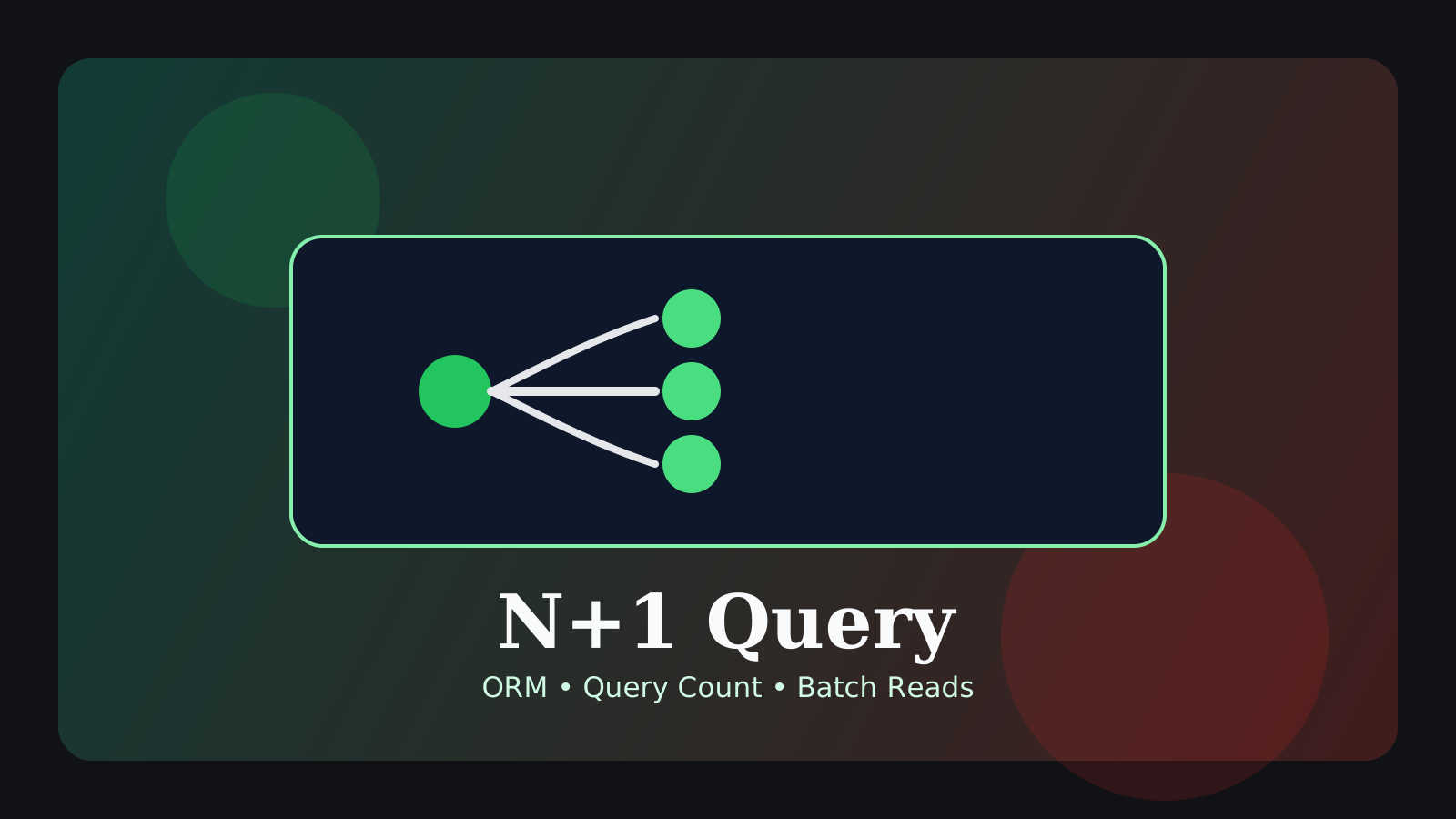
Imagine fetching 100 posts and then fetching each post’s author in a separate query.
That becomes:
- one query for the post list
- 100 more queries for authors
So you end up with 101 queries in total. That is the classic N+1 pattern.
Why does this happen often with ORMs?
ORMs make object access feel natural, so code may look as simple as:
post.author
But behind the scenes, each access may trigger its own database query.
So even clean-looking code can hide a large number of SQL round trips.
Why does it hurt performance so much?
Even if each individual query is not terribly slow, the total cost can become large because:
- database round trips multiply
- network overhead accumulates
- connections stay busy longer under concurrency
- total response time grows
So the bottleneck comes from the repeated pattern, not necessarily from one terrible query.
How can you reduce it?
Common approaches include:
- preloading related data
- using joins or eager loading
- batching related lookups
The important shift is to think ahead about the data shape the screen actually needs, then reduce the number of trips required to assemble it.
Where does this appear most often?
It is especially common in:
- list pages
- relation-heavy views like comments, authors, and tags
- admin pages that assemble lots of related data
So it often appears where one parent list fans out into many related reads.
Common misunderstandings
1. The ORM will optimize it automatically
ORMS can help, but they do not always optimize relationship access patterns for you.
2. If each query is fast, there is no problem
Enough individually fast queries can still add up to a big bottleneck.
3. A join always solves everything
Sometimes it helps a lot, but in other cases batching or eager loading may be the better balance.
FAQ
Q. How do I detect N+1 quickly?
Query logs, ORM debug output, and simply counting queries on list pages are very useful.
Q. Should small apps care about this early?
It may stay hidden early on, but it often becomes painful suddenly as data grows.
Q. Can too many joins become slow too?
Yes. The goal is to balance query count and query complexity, not maximize one at the expense of the other.
Read Next
- To inspect actual execution behavior, continue with the MySQL EXPLAIN Guide.
- For a broader performance review flow, read the MySQL Query Optimization Checklist.
While AdSense review is pending, related guides are shown instead of ads.
Start Here
Continue with the core guides that pull steady search traffic.
- Middleware Troubleshooting Guide: Redis vs RabbitMQ vs Kafka A practical middleware troubleshooting guide for developers covering when to reach for Redis, RabbitMQ, or Kafka symptoms first, and which problem patterns usually belong to each tool.
- Kubernetes CrashLoopBackOff: What to Check First A practical Kubernetes CrashLoopBackOff troubleshooting guide covering startup failures, probe issues, config mistakes, and what to inspect first.
- Kafka Consumer Lag Increasing: Troubleshooting Guide A practical Kafka consumer lag troubleshooting guide covering what lag usually means, which consumer metrics to check first, and how poll timing, processing speed, and fetch patterns affect lag.
- Kafka Rebalancing Too Often: Common Causes and Fixes A practical Kafka troubleshooting guide covering why consumer groups rebalance too often, what poll timing and group protocol settings matter, and how to stop rebalances from interrupting useful work.
- Docker Container Keeps Restarting: What to Check First A practical Docker restart-loop troubleshooting guide covering exit codes, command failures, environment mistakes, health checks, and what to inspect first.
While AdSense review is pending, related guides are shown instead of ads.